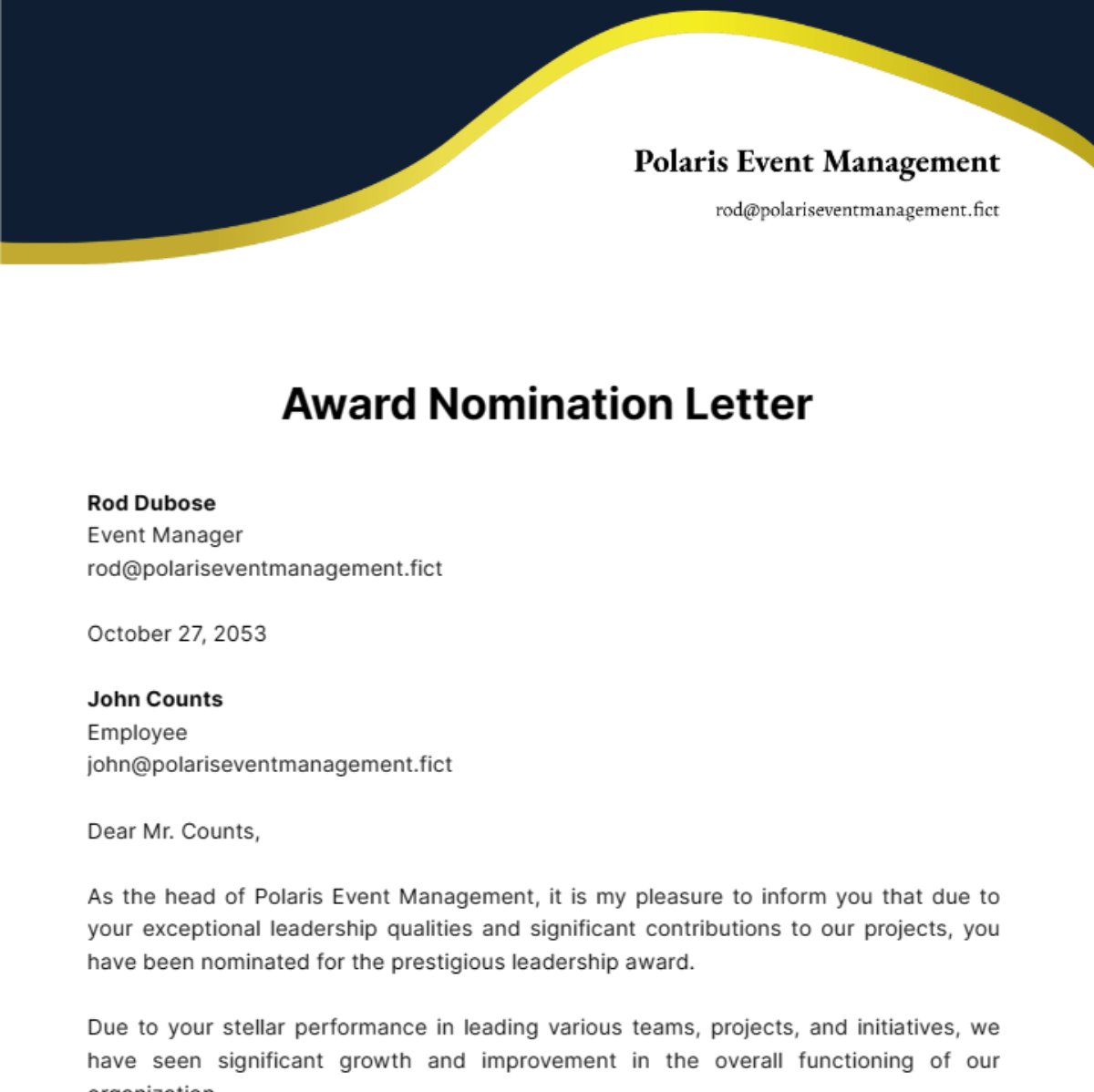
When you think about "awards," your mind might jump to glittering ceremonies and red carpets. But in the workplace, awards are far more than just shiny objects; they're potent drivers of culture, engagement, and performance. Effective Award Program Management & Nomination Guides aren't just about picking a winner; they're about strategically recognizing value, inspiring excellence, and fostering a workplace where contributions are seen, celebrated, and replicated.
Done right, a well-managed award program is a strategic asset, capable of transforming morale, boosting retention, and aligning individual and team efforts with core organizational goals. But how do you build such a program, and how do you craft a nomination that truly captures the magic? This guide is your blueprint.
At a Glance: Key Takeaways for Award Program Management & Nominations
- Strategic Purpose: Awards aren't just perks; they're strategic tools for culture, engagement, and performance.
- Design with Intent: Define clear objectives, audience, budget, and categories before launching any program.
- Fairness First: Transparent evaluation criteria, measurable outcomes, and an unbiased selection process are non-negotiable.
- Storytelling is Key: Nominations aren't just facts; they're compelling narratives demonstrating impact, innovation, and collaboration.
- Quantify Everything: Use metrics and specific examples to validate claims and showcase tangible results.
- Team vs. Individual: Understand the distinct focus for each – collaborative success for teams, specific contributions for individuals.
- Leverage Tech: Digital nomination forms with smart features can streamline the process and enhance user experience.
- Measure Impact: Track engagement, retention, and performance metrics to prove your program's value.
- Avoid Pitfalls: Steer clear of vague descriptions, incomplete documentation, and late submissions.
Beyond the Trophy: Why Strategic Recognition Matters
Awards, at their heart, are about acknowledging effort and results. But a truly strategic recognition program goes deeper. It's a powerful mechanism to:
- Elevate Workplace Culture: By consistently celebrating desired behaviors and outcomes, you sculpt a culture of appreciation, high performance, and continuous improvement. It shows what you value.
- Boost Employee Engagement & Retention: Feeling recognized is a fundamental human need. When employees see their hard work acknowledged, they're more motivated, more loyal, and far less likely to seek opportunities elsewhere. It creates a virtuous cycle.
- Document Best Practices: Award-winning projects or initiatives become case studies, illustrating "how we do things exceptionally well around here." This provides valuable learning for others.
- Align Efforts with Organizational Objectives: When award criteria are tied directly to company goals, you reinforce what truly matters, guiding teams and individuals toward achieving those objectives.
- Identify Future Leaders: Observing who drives successful projects, mentors colleagues, or innovates solutions through an award lens can reveal hidden leadership potential.
This isn't just theory; it's a proven practice. Organizations that excel at recognition often see tangible improvements in employee satisfaction, productivity, and even bottom-line results.
Building Your Recognition Foundation: Award Program Management Essentials
Launching a successful award program requires careful planning, not just good intentions. Think of yourself as an architect, laying the groundwork for something truly impactful.
Designing an Impactful Award Program
Before you even think about "who gets what," define the strategic purpose of your program.
- Define Your Objectives: What specific behaviors or outcomes do you want to encourage? Is it innovation, customer service excellence, project efficiency, community impact, or something else entirely? Clear objectives guide every other decision.
- Identify Your Audience & Scope:
- Who are you recognizing? Individuals, teams, departments, leaders, volunteers, researchers, authors, educators?
- What scale? Company-wide, departmental, regional, or global?
- What type of achievement? Long-term contributions, a single impactful project, continuous improvement, or groundbreaking research?
The Project Management Institute (PMI) offers a fantastic blueprint for diverse recognition. For instance, they distinguish between: - Team Awards: Like the PMI Project of the Year, recognizing outstanding project success and management practices, or the PMI PMO of the Year Award for advancing project, program, and portfolio management.
- Individual Awards for Professionals: Such as the PMI Eric Jenett Person of the Year Award for leadership contributions to the profession, or the PMIEF Kerzner Award for Excellence in Social Impact for those solving social issues.
- Specialized Awards: Including the PMI David I. Cleland Project Management Literature Award for authors, the PMI Research Achievement Award for researchers, or the PMI Linn Stuckenbruck Teaching Excellence Award for educators.
These diverse categories ensure a wide range of contributions can be celebrated, showing that every facet of the organization's work is valued.
- Budget & Resources: Awards aren't free. Determine your budget for prizes (trophies, cash, experiences), events, administration, and communication. Will you need dedicated staff time for management and evaluation?
- Craft Categories That Resonate: Tailor your categories to your objectives and audience. Are you looking for:
- Innovation & Problem-Solving: For teams developing breakthrough solutions or redesigning operational procedures.
- Cross-Functional Collaboration: Recognizing efforts like integrating workflow systems or implementing new software across departments.
- Customer Service Excellence: Highlighting teams delivering outstanding support or optimizing customer experience.
- Leadership: For individuals coordinating complex projects or facilitating communication.
- Community Impact: Recognizing contributions to social issues or sustainable development, like the PMIEF Kerzner Award.
Setting Up Fair & Transparent Evaluation Criteria
The integrity of your award program hinges on a fair and transparent selection process.
- Key Components for Criteria: Your criteria must be objective and measurable. Consider:
- Measurable Outcomes: What were the quantifiable results (e.g., X% efficiency gain, Y dollars saved, Z new customers)?
- Innovation & Creativity: Was a novel approach used? Did it challenge the status quo?
- Impact: How significant was the contribution to the organization, clients, or community?
- Leadership & Collaboration: How effectively did individuals or teams work together? (Especially critical for team awards.)
- Alignment with Values: Does the achievement reflect your organization's core values?
- Scoring Rubrics: Develop a clear rubric for each award category. This standardizes evaluation, reduces bias, and provides useful feedback for nominees. Assign weighted scores to different criteria.
- Selection Committee: Assemble a diverse committee free from conflicts of interest. Include representatives from different departments, levels, and backgrounds to ensure a balanced perspective. Provide them with clear guidelines and training.
Operationalizing Your Program: From Launch to Lifecycle
Once designed, your program needs robust operational management.
- Promotion & Communication Strategy: No one can be recognized if they don't know the program exists or how to participate.
- Announce clearly: Use internal communications (intranet, newsletters, all-hands meetings) to launch and promote the program.
- Highlight past winners: Showcase previous recipients to inspire future nominations and demonstrate the program's value.
- Provide guidance: Offer workshops or resources on how to write a compelling nomination.
- Nomination Process: Make it easy for people to nominate. Digital nomination forms are a game-changer here, offering advantages like conditional logic, progress saving, and mobile responsiveness. We'll delve deeper into this shortly.
- Timeline Management:
- Program Cycles: Organizations often run group award submission cycles quarterly or annually, depending on their size and objectives. Quarterly cycles offer frequent boosts to morale, while annual cycles allow for comprehensive evaluation of longer-term projects.
- Clear Deadlines: Publish nomination opening and closing dates, evaluation periods, and announcement timelines well in advance.
Crafting a Winning Story: Your Nomination Guide
A great achievement alone isn't enough; it needs a great story. Your nomination isn't just a list of facts; it's a persuasive narrative designed to convince the judges of your nominee's exceptional merit.
Understanding the "Why": The Heart of Any Nomination
Every nomination must clearly articulate why this individual or team deserves recognition.
- Align with Award Criteria: This is non-negotiable. Read the award criteria meticulously and ensure every point in your nomination directly addresses them. If the award is for "innovation," don't focus solely on "efficiency" unless you can link efficiency to an innovative method.
- Individual vs. Team Nominations – Key Differences: This distinction is crucial.
- Individual Recognition (e.g., PMI Rising Leader): Focuses on a single person's specific contributions, leadership, or expertise. It highlights their unique impact.
- Team Recognition (e.g., PMI Project of the Year): Celebrates collaborative accomplishments, shared decision-making, collective problem-solving, and group dynamics. It requires comprehensive documentation of each member's role and their contribution to collective success.
- Examples of Team Focus:
- Cross-functional team collaboration: Successfully integrating workflow systems, redesigning customer onboarding, or implementing new software with comprehensive training.
- Innovation and problem-solving teams: Developing a breakthrough product solution, addressing digital transformation challenges, or achieving research breakthroughs.
- Customer service excellence teams: Delivering outstanding customer support, strengthening client relationships, or managing crisis communication effectively.
- Key points for Team Member Recognition (Peer-Nominated or Contributor): Even within team awards, you might highlight individuals for:
- Leadership within teams: Coordinating complex projects, facilitating communication, or leading change initiatives.
- Peer recognition: Acknowledging outstanding collaboration, support, or communication excellence.
- Outstanding contributor: Highlighting contributions to project excellence, quality assurance, or technical innovation within the group.
The Anatomy of a Compelling Nomination
Think of your nomination as a mini-business case for why your nominee is exceptional.
Essential Elements: What Every Nominator Needs
- Clearly Identify the Specific Accomplishment: What exactly was done? Be precise.
- Measurable Outcomes: What were the results? Quantify impact with data, percentages, or concrete figures. Don't just say "improved efficiency"; say "improved efficiency by 15%."
- Provide Comprehensive Context:
- Challenges Faced: What obstacles did the team or individual overcome? This highlights resilience and ingenuity.
- Innovative Approaches: What unique methods, tools, or strategies were employed?
- Individual/Team Roles & Contributions:
- For teams, detail how each member contributed to the collective success, emphasizing collaboration and shared decision-making.
- For individuals, describe their specific responsibilities and actions.
- Evidence of Collaboration: (Crucial for team awards!) How did the team work together, leverage diverse skills, and resolve conflicts?
- Quantify Impact Data: This cannot be stressed enough. "Increased customer satisfaction by 20%," "delivered project two weeks ahead of schedule," "saved $50,000 in operational costs."
- Demonstrate Long-Term Influence: How did this achievement create lasting value or set a new standard?
Storytelling That Sells: Writing Techniques
Facts alone can be dry. Weave them into a narrative that engages the reader.
- Engaging Storytelling: Frame the nomination as a journey: challenge, solution, impact.
- Attention-Grabbing Opening: Start with a hook that immediately communicates the significance of the achievement.
- Specific Instances & Anecdotes: Instead of saying "they are a good problem-solver," describe a specific instance where they brilliantly solved a complex problem.
- Active Voice: "The team implemented a new system" is stronger than "A new system was implemented by the team."
- Parallel Structure: Use consistent phrasing for lists and key points to enhance readability.
- Strategic Use of Metrics: Don't just list numbers; explain what they mean in context.
- Clear Transitional Phrases: Guide the reader smoothly from one point to the next.
- Align with Award Criteria: Constantly cross-reference the criteria to ensure your narrative directly addresses each point.
Structuring for Success: Format & Flow
A well-organized nomination is easier to read and evaluate.
- Clear Section Headers: Use descriptive headings to break up the text (e.g., "The Challenge," "Innovative Solution," "Measurable Impact").
- Consistent Font/Spacing: Maintain a professional and clean appearance.
- Bullet Lists for Key Accomplishments: Make key points easy to scan and digest.
- Professional Tone: Maintain objectivity and avoid overly informal language.
- Executive Summary: For longer nominations, a concise executive summary at the beginning provides an immediate overview of the key achievement and its impact, helping judges grasp the essence quickly. You can find more insights on exceptional achievements within our Gold Medal Winners hub.
From "Good" to "Gold": Avoiding Common Nomination Pitfalls
Even the most deserving candidates can be overlooked due to common nomination mistakes.
Content and Writing Blunders:
- Vague or Generic Descriptions: Lacking specific details, anecdotes, or measurable outcomes. "Increased efficiency" is weak; "Increased report generation efficiency by 25% through automation" is strong.
- Overemphasis on Individual Accomplishments (for Team Awards): While individual contributions are part of a team effort, the narrative must consistently return to the collaborative aspect and shared success.
- Missing Quantitative Data: Without numbers, claims are harder to believe. Always ask: "Can I measure this?"
- Insufficient Explanation of Challenges: Failing to describe the hurdles makes the achievement seem less impressive.
- Poor Writing Quality: Typos, grammatical errors, and unclear phrasing detract from credibility. Proofread meticulously!
Timing and Submission Errors:
- Late Submissions: A guaranteed way to disqualify a nominee. Adhere strictly to deadlines.
- Incomplete Documentation: Missing signatures, required forms, or supporting materials (photos, testimonials, data reports) can invalidate a nomination.
- Incorrect Submission Formats: Pay attention to file types, naming conventions, and portal requirements.
Documentation and Evidence Gaps:
- Insufficient Supporting Documentation: Beyond the narrative, provide concrete proof. This could include project plans, client testimonials, performance reports, or before-and-after comparisons.
- Lack of Specific Metrics or Quantitative Data: Reiterate – numbers are your friends.
- Absence of Before-and-After Comparisons: Demonstrating the state before the intervention and the improvement after clearly illustrates impact.
- Missing Stakeholder Endorsements: Quotes or letters from clients, senior leaders, or project beneficiaries add significant weight.
Leveraging Technology: Digital Nomination Forms & Program Management
In today's digital age, managing award programs with pen and paper is inefficient. Digital solutions aren't just convenient; they actively enhance the process.
Optimizing the Nominator Experience
A smooth nomination process encourages more, higher-quality submissions.
- Conditional Logic: Only show relevant questions based on previous answers. For example, if a "team award" is selected, display team-specific fields.
- Progress Saving: Allow nominators to save their work and return later, preventing lost effort and frustration.
- Auto-Population from Integrated Databases: If possible, link with HRIS or employee directories to pre-fill basic information, saving time and reducing errors.
- Real-time Validation: Provide immediate feedback on missing fields or incorrect formats.
- Mobile-Responsive Design: Ensure the form is easy to complete on any device.
- Smart Routing: Automatically send nominations to the correct evaluators based on category or department.
Streamlining Management with System Integration
For program administrators, technology transforms oversight and effectiveness.
- Integrate with HRIS/Employee Databases: Automate data collection, track historical acknowledgments, and link awards to employee profiles. This reduces manual entry and ensures data accuracy.
- Track Historical Acknowledgments: Understand who has been recognized, for what, and when. This helps identify trends, ensure equitable distribution, and avoid recognizing the same individuals too frequently for similar achievements.
- Integrate Performance Metrics: Connect award outcomes to broader performance indicators, making it easier to see the correlation between recognition and organizational success.
- Analytics Dashboards: Utilize dashboards to track participation rates, distribution across departments, award category popularity, and overall program effectiveness. This data is invaluable for continuous improvement.
The Ripple Effect: Measuring Impact & Fostering a Culture of Recognition
The award ceremony is just one moment. The true value of your program lies in its sustained impact and the culture it builds.
Quantifying Success: Metrics That Matter
To demonstrate the value of your award program, you need to measure its long-term effects.
- Employee Engagement Scores: Look for improvements in survey results related to recognition, appreciation, and feeling valued.
- Retention Rates: Do employees who are recognized stay with the company longer? Track retention rates for award recipients and nominees.
- Collaboration Effectiveness: Can you correlate team awards with increased cross-functional project success or improved internal communication?
- Innovation Metrics: Are recognized innovation teams leading to more patents, new product launches, or process improvements?
- Program Participation: Simply tracking the number of nominations submitted, and from which departments, can indicate engagement.
By tracking these metrics, you can refine your program, prove its ROI, and secure continued leadership buy-in.
Sustaining the Momentum: Beyond the Ceremony
Recognition shouldn't end when the applause fades.
- Continuous Communication: Keep the stories of winners alive. Feature them in internal newsletters, on the company intranet, or in town halls. Reinforce the behaviors and achievements celebrated.
- Celebrate All Nominees: While only a few can win, acknowledge every nominee for their hard work. A personalized note from leadership can go a long way in validating effort.
- Leadership Buy-in: Ensure senior leadership actively participates in the program, from presenting awards to championing the culture of recognition. Their visible support reinforces the program's importance.
Building a culture of team recognition, specifically, fosters collaboration, innovation, and stronger employee engagement, proving that collective efforts are highly valued.
Your Next Steps: Becoming a Recognition Champion
You now have a comprehensive guide to building and managing an impactful award program, along with the tools to craft compelling nominations. Whether you're starting from scratch or refining an existing program, remember these core principles: strategic intent, transparency, and human-centered storytelling.
Don't just hand out trophies; ignite a culture where excellence is not only achieved but celebrated with purpose. Start by reviewing your current recognition efforts, identify areas for improvement based on this guide, and begin to transform your workplace one well-deserved award at a time. Your organization, and its people, will thank you for it.